Photo: Hippostcard.com
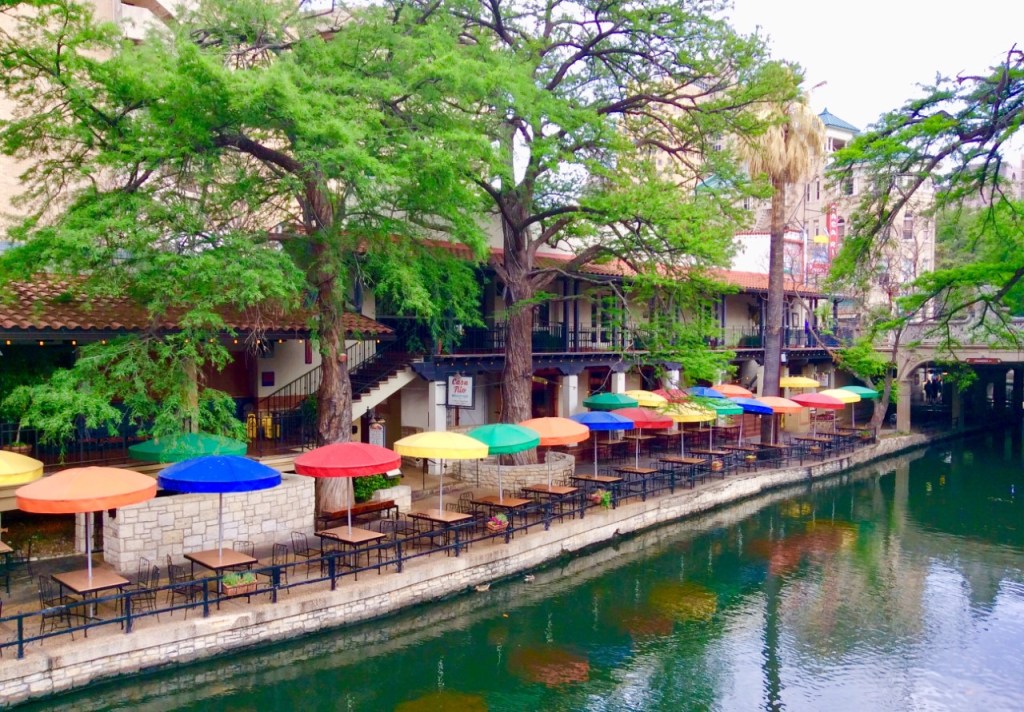
Photo: Author
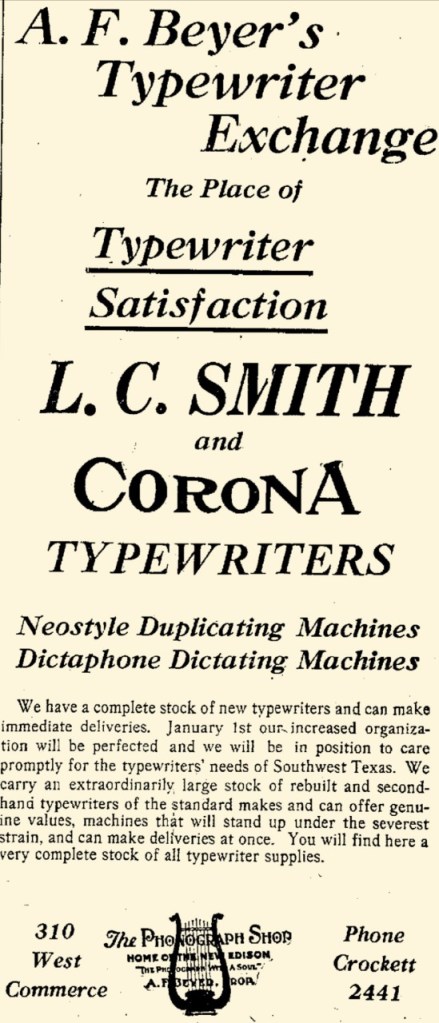
Alfred Frederick Beyer was born in 1891 in San Antonio, and his early career was as a typewriter mechanic. However, the repairman’s bench did not satisfy him, or appeal to him as a long-term career, because he had a determination and passion for business. He had little money, but he possessed an abundance of character, skill and determination, and in 1912, at the age of 21, Alfred Beyer opened a modest typewriter exchange and repair shop. Originally a one-man operation, it slowly grew, and over time, moved to a couple of smaller locations around town, before it expanded into a substantial business which was situated at 310 W. Commerce Street . . . not far from the San Fernando Cathedral.
Advertisement: San Antonio Evening News December 15, 1918
The business grew to employ 50 people, and had also branch offices in Austin and Taylor, Texas. It was then rated as the largest typewriter and office appliance business in southwestern Texas. At this store Alfred Beyer introduced more products to his range, including other office machines, radios and phonographs.

Advertisement: San Antonio Evening News December 15, 1918
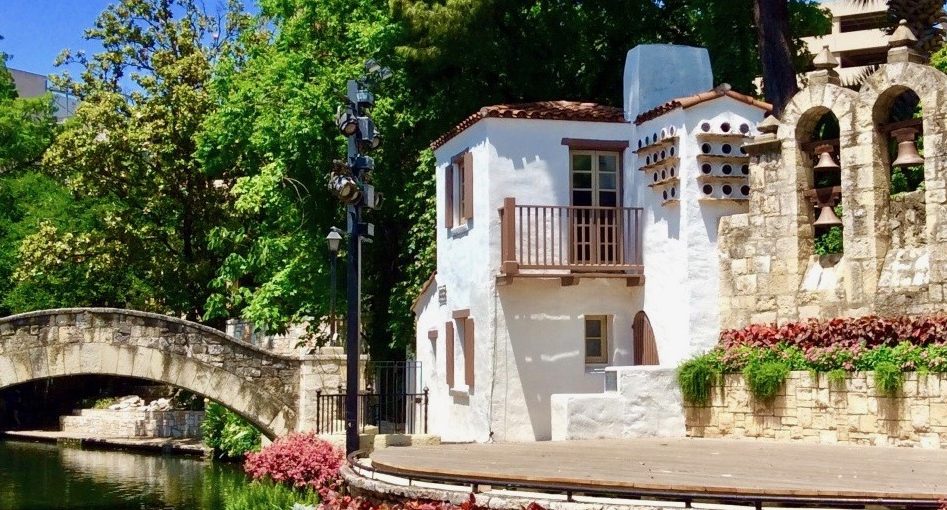
Incorporating sound business practices, he later relocated the company to the banks of the San Antonio River, a little further east, on the Riverwalk, at the Commerce Street bridge. The new location, originally built as a 6 room residence in 1809 by Antonio Rodriguez Baca, once served as the Bull Brothers saloon, and was a favorite watering hole of Judge Roy Bean when he visited San Antonio. It sits on land that was first granted title back in 1777 by the King of Spain, and today it incorporates many features of the original Spanish hacienda, including the fireplace, a cedar door and the solid rock walls.
During the flood of 1921, his premises suffered a lot of damage, and his inventory was badly impacted. However, Thomas Edison himself heard of the plight, and came to his rescue by replenishing the phonographs and records in his store. Expanding the range of appliances further, he went on to introduce vacuum cleaners, washers, dryers, and refrigerators as well.
However, in 1946, Alfred Beyer, who also had short-lived success with 2 drive-in theaters, came to the conclusion that his appliance store was a sinking ship, due mainly to the fact that the large department store, Joske’s, was located within a stone’s throw from his establishment, and they, along with other larger stores like Sears Roebucks, had the ability to undersell him on the same goods that he offered. He had to diversify ( again ), and he came up with the plan to utilize his riverfront property.
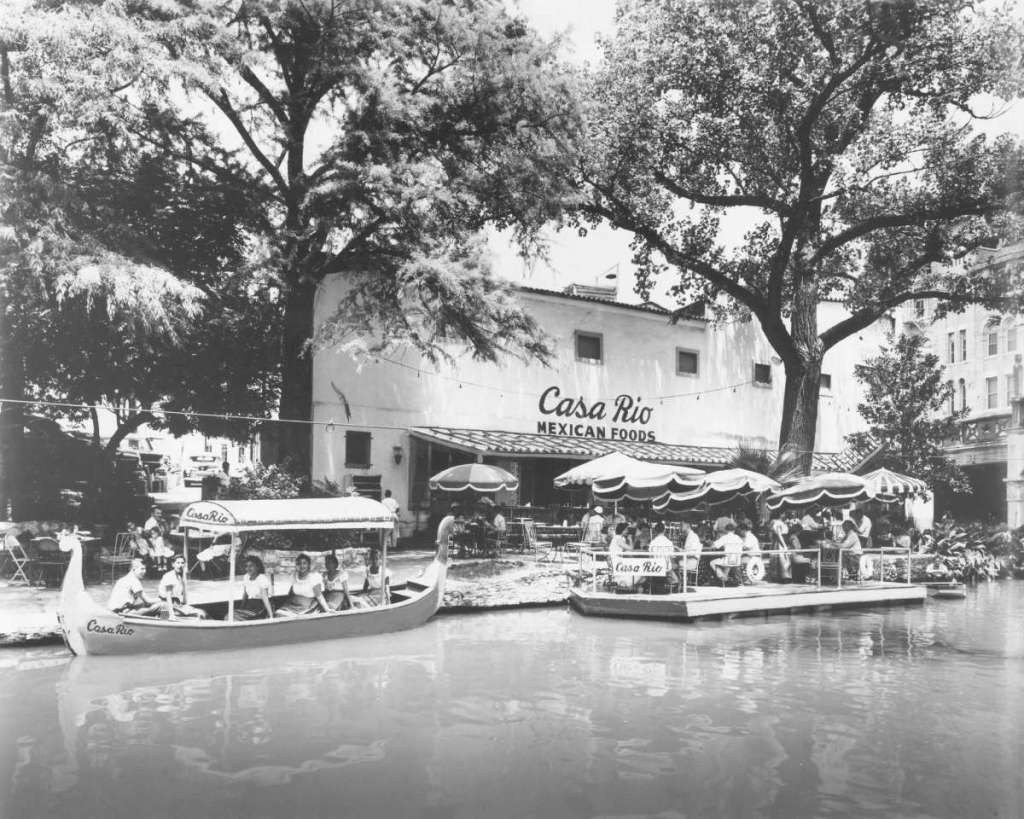
Carving out the layers of silt from under his building, and creating a staircase below, he came up with the plan to establish a restaurant on the river bank. He named it “Casa Rio” and it had it’s Grand Opening on October 4th, 1946.
Around the same time that Alfred Beyer opened “Casa Rio” on the Riverwalk, Architect Robert H. H. Hugman opened his office on the other side of the Commerce Street bridge, also at river level, in the Clifford Building. There were many who thought they both would be facing disaster when the river flooded again.
Once established, Alfred Beyer decided to make the most of the location, and started to think about incorporating boats on the river, as a way of promoting his restaurant, and the Riverwalk itself. According to his grandson, Bill Lyons, who runs the restaurant today, Alfred Beyer tried dinner cruises from his restaurant by connecting 55 gallon drums with planks of wood. Named the “S.S. Enchilada”, the craft unfortunately capsized one day with diners aboard, who were thrown unceremoniously into the river.
There were other failures along the way. One boat that featured elaborate swan heads, was decapitated under Rosita’s Bridge, and crudely-fashioned paddle boats ended up soaking the passengers. There were also gondola-styled craft, complete with a gondolier using a long pole to propel the boat along the river. This was once the dream of Architect Robert Hugman in his original concept for the Riverwalk.
There were many versions of the craft he launched, in order to utilize the river for the restaurant patrons.

Photo: mysa.com
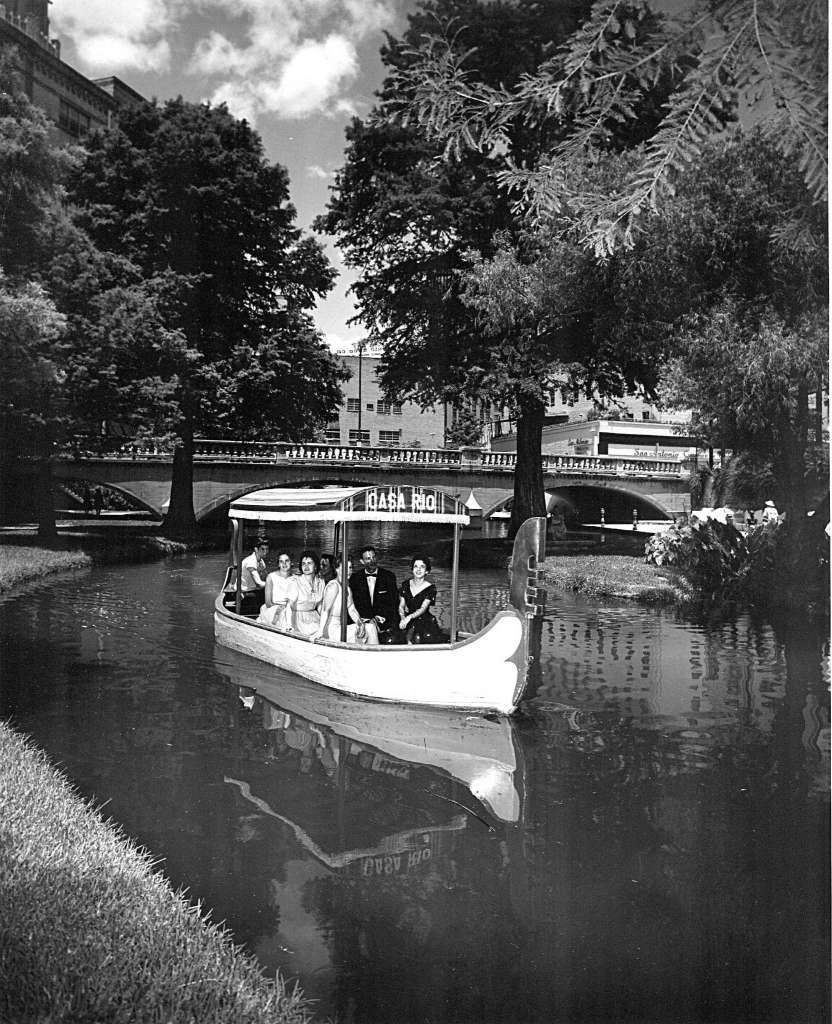
Photo: Pinterest
He also attempted to beautify that section of the Riverwalk with gardens and fountains. According to Bill Lyons, “He tried to create an atmosphere to attract people to the Riverwalk. The Riverwalk did little to attract customers at the time, because it was badly lit and unadorned, but my grandfather had plans to fix up the area to lure people to it, and nothing was going to get in his way.”
Despite all of these innovations, Bill Lyons says his grandfather’s business did struggle from 1946 – 1968, at which time, under the guidance of David Straus and others from the Riverwalk Commission, the San Antonio Riverwalk gained a renewed focus as part of the World’s Fair in San Antonio.
Mr Lyons adds, “David Straus saw my grandfather’s fortitude to stay down here, and he saw the opportunity for our city to make something work with the whole river. He took Grandpa’s determination and kinda promoted that with some other property owners on the river.”
Today, the iconic, multi-colored umbrellas at “Casa Rio” are a feature, and a symbol, of the San Antonio Riverwalk. They are also a testament to the determination, grit, ingenuity and foresight of a San Antonio trailblazer, Alfred F. Beyer.
Happy Birthday “Casa Rio” !

Photo of Alfred F. Beyer: Office Appliances Journal

Photo: Author
Sources:
San Antonio Uncovered….Mark Louis Rybczyk
American Venice……Lewis F. Fisher
mysanantonio.com….Paula Allen ( August 18 2012 )
casario.com
San Antonio Public Library.…”Voices of San Antonio”
Interview with Bill Lyons…Schilo’s 9/23/2021
Office Appliances Journal…August 1920
San Antonio Express News….Estella Duran, June 10 1996
South Holland Star……November 30, 1995
Follow My Blog
Get new content delivered directly to your inbox.
 Memories of San Antonio